-
-
011- 69313821

011- 69313821
Studying abroad is a dream for many students, but the high costs of tuition, travel, and living expenses can make it challenging. Study abroad scholarships provide financial support to talented students, helping them pursue quality education overseas without financial stress. These scholarships can be merit-based, need-based, or specific to certain fields of study and countries. They not only cover costs but also open doors to global exposure, career opportunities, and personal growth.
In this guide, you'll read more about the importance of scholarships, detailed profiles of the top scholarships for Indian students in 2025, tips on finding the right scholarship, strategies to increase your chances of winning, about study abroad funding. This comprehensive guide will help you navigate the process and make informed decisions.
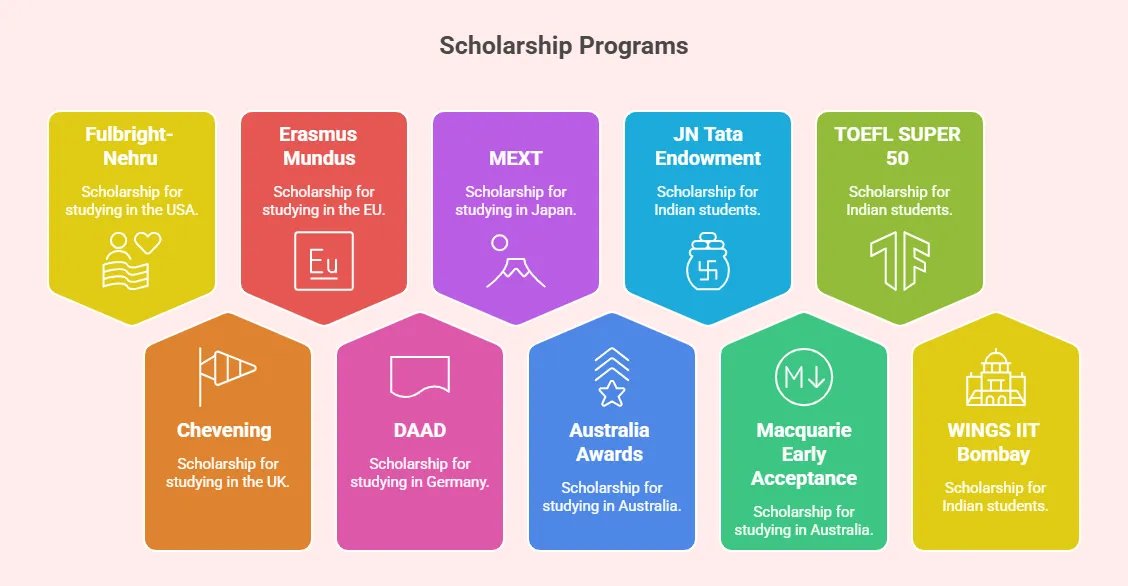
Studying abroad is a dream for many students, but the costs involved can often feel overwhelming. Tuition fees, living expenses, travel costs, and other miscellaneous expenses add up quickly. This is where scholarships play a crucial role. They not only make education abroad affordable but also open doors to opportunities that might otherwise feel out of reach.
Here's why scholarships are essential for students planning to study overseas:
One of the most obvious benefits of scholarships is financial relief. Scholarships can cover:
| Expense Type | What a Scholarship Can Cover |
|---|---|
| Tuition Fees | Partial or full coverage of course fees |
| Living Expenses | Rent, food, and daily essentials |
| Travel Costs | Airfare and local transportation |
| Study Materials | Books, software, or lab equipment |
Without scholarships, students often rely on loans or personal savings, which can create long-term financial pressure. A scholarship reduces this stress and allows students to focus on learning.
Scholarships make global education accessible to students from diverse backgrounds. Even if someone doesn't have a high family income, they can still pursue their dream course abroad with the right financial support. Many scholarships are need-based, which ensures that talented students aren't held back due to money constraints.
Many scholarships are merit-based, meaning they reward students for their academic achievements or extra-curricular involvement. This creates an incentive for students to maintain strong grades, participate in leadership roles, and develop skills that will benefit them both abroad and in their future careers.
Scholarships often come with additional perks such as:
Beyond financial and academic advantages, scholarships encourage personal development. Students gain confidence, independence, and the ability to navigate new environments. Studying abroad is a holistic experience, and scholarships help students focus on learning, research, and cultural exposure rather than worrying about finances.
Scholarships for studying abroad come in many shapes and sizes. Understanding the different types helps you identify the ones that match your profile and needs. Broadly, scholarships can be categorized into merit-based, need-based, country-specific, university-specific, course-specific, government-funded, and private organization scholarships.
Here's a breakdown of the main types:
These scholarships are awarded based on academic excellence, test scores, or exceptional achievements. They reward students for their performance in school, college, or standardized exams.
Why it matters: Merit-based scholarships encourage students to maintain consistent academic performance and showcase their skills beyond grades.
These scholarships focus on financial need. They are designed to support students who may not afford international education otherwise.
Some scholarships are offered by governments or organizations for students from specific countries.
| Scholarship | Destination | Target Students |
|---|---|---|
| Chevening | UK | Students from over 160 countries, including India |
| Australia Awards | Australia | Indian and South Asian students |
| Eiffel Excellence | France | International students in master's or PhD programs |